
The Power of Saying No: Why Moms Need To Set Healthy Boundaries
It is so easy for moms to fall into the habit of saying yes to everything. School events. Work projects. Social invitations. Helping friends. Helping more friends. Before we know it, our day is packed, and we are running on fumes.
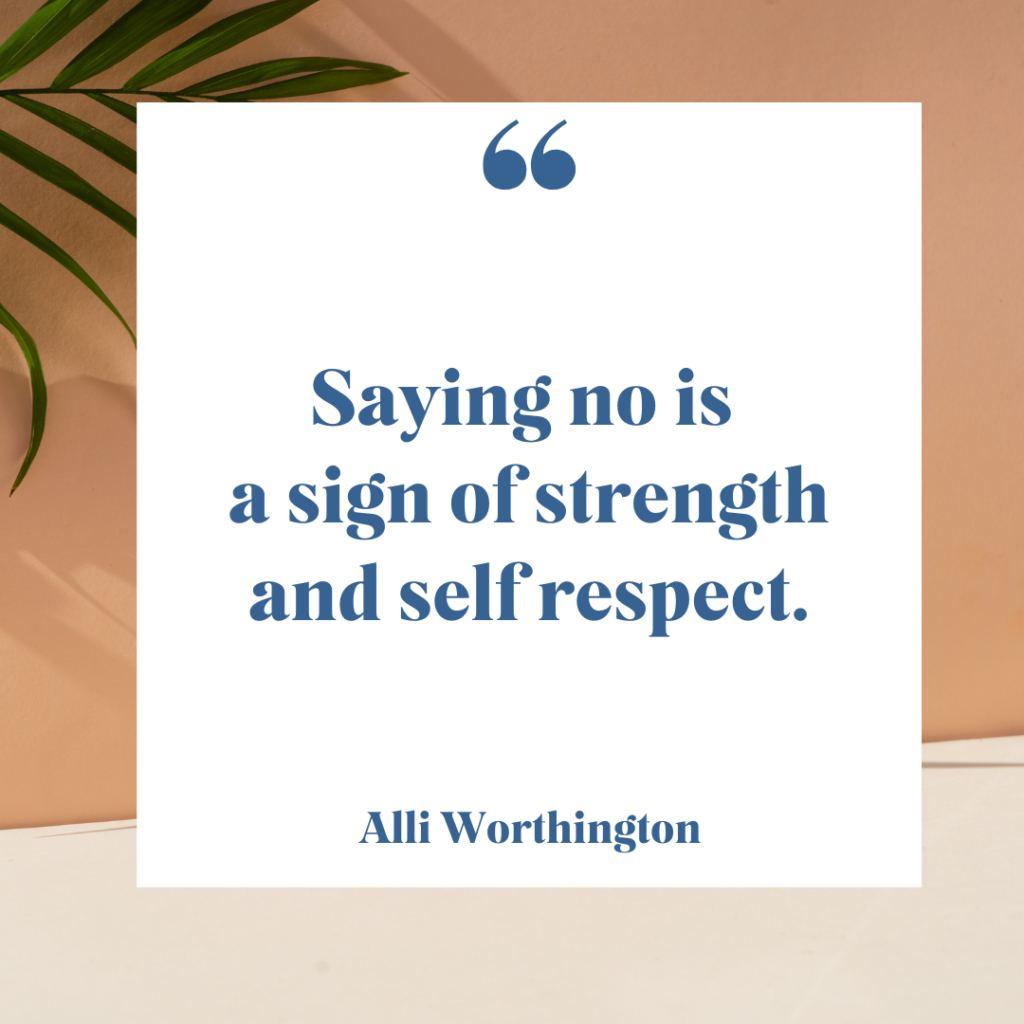
At some point, we have to remember that our needs matter too. Saying no is not selfish. It is how we protect our time, our energy, and our emotional health. When we learn to say no with confidence, we make room for what truly matters. An emotionally healthy mom is one of the greatest gifts we can give our families.
The Stories We Tell Ourselves About Saying No
Moms carry a lot. And somewhere along the way, we pick up little stories about what it means to say no. These stories feel true in the moment, but they quietly drain our energy and make it harder to protect our time. Let’s look at the most common ones and why they don’t hold up.
1. Saying no makes me a bad mom: When you say no to what drains you, you make room for what helps your family thrive. Protecting your energy is part of being a good mom.
2. It feels rude: You can say no kindly. A warm, simple sentence is enough. You do not need to apologize or explain your whole schedule.
3. I’ll let people down Trying to avoid disappointing others leads straight to burnout. You are allowed to protect your time and capacity.
4. I’ll feel guilty: Guilt shows up because you care, but it should not run your life. A no that supports your priorities is not wrong.
5. It means I’m weak: Saying no takes strength. It takes courage to choose what is best for your family instead of what is easiest in the moment.
6. It will hurt my relationships: Healthy relationships grow stronger when boundaries are clear. People learn what you can offer and what you cannot.
7. It’s selfish: Saying no is a form of self-care. When you take care of your emotional health, everyone benefits.
How to Say No in a Kind and Confident Way
Saying no can feel uncomfortable at first, especially if you’re used to saying yes to everything. But with practice, it becomes easier and more natural.
These simple ways will help you say no without guilt:
1. Be kind but clear: You can say no in a warm, friendly way without apologizing or giving a long explanation. A simple sentence is enough.
Example: “I appreciate you asking, but I can’t take that on right now.”
2. Notice your feelings: Your body often tells the truth before your mouth does. If you feel tense, overwhelmed, or resentful when someone asks for your time, that’s your cue.
Example: You get a text asking if you can “quickly” bake something for the school event. Your stomach drops. That’s a sign it’s a no.
3. Start with small nos: Practice saying no to little things first. As you get more comfortable, it becomes easier to set boundaries around bigger commitments.
Example: “No, I can’t stay after the meeting today.” or “No, I’m not able to join the group chat.”
4. Offer another option when you want to: If you care about the person but can’t meet the request, suggest something that fits your schedule.
Example: “I can’t make dinner, but I’d love to grab coffee next week.”
How to Handle Pushback Without Losing Your Peace
Sometimes people try to change your mind after you say no. Staying calm and steady helps you hold your boundary without conflict.
1. Show you understand their perspective: You can acknowledge their feelings without saying yes.
Example: A friend really wants you to join a committee and keeps asking. You say: “I know this matters to you, and I appreciate you thinking of me but I can’t join the committee this year.”
2. Keep your tone calm and steady: You don’t have to match their urgency. Staying calm helps the conversation stay respectful. Example: Someone responds with, “It will only take a minute!” You stay steady and say: “I hear you. I still can’t take it on.”
3. Repeat your no if needed: You don’t have to explain or defend your decision. A second clear no is often all it takes.
Example: They try again: “Are you sure? We really need help.” You say: “I really can’t take that on right now.” Then stop talking. Silence is a boundary too.
Why Healthy Boundaries Matter for Moms
Once we let go of the old stories about saying no, we can finally see why boundaries matter so much in our everyday lives as moms.
Healthy boundaries help us take back control of our time, our energy, and our emotional well‑being. When we don’t have boundaries, everything and everyone gets a piece of us, and we’re left running on empty. As Dr. Dana Nelson explains, poor boundaries often lead to resentment, anger, and burnout. And moms know that feeling all too well.
When we say yes to everything, we end up neglecting our own needs. That’s when our mental and physical health starts to suffer. Boundaries aren’t about shutting people out. They’re about protecting what matters most so we can show up as the mom we want to be.
Boundaries help us:
- Stay connected to who we are
- Keep our relationships healthy
- Honor our needs and values
- Stop carrying more than we can handle
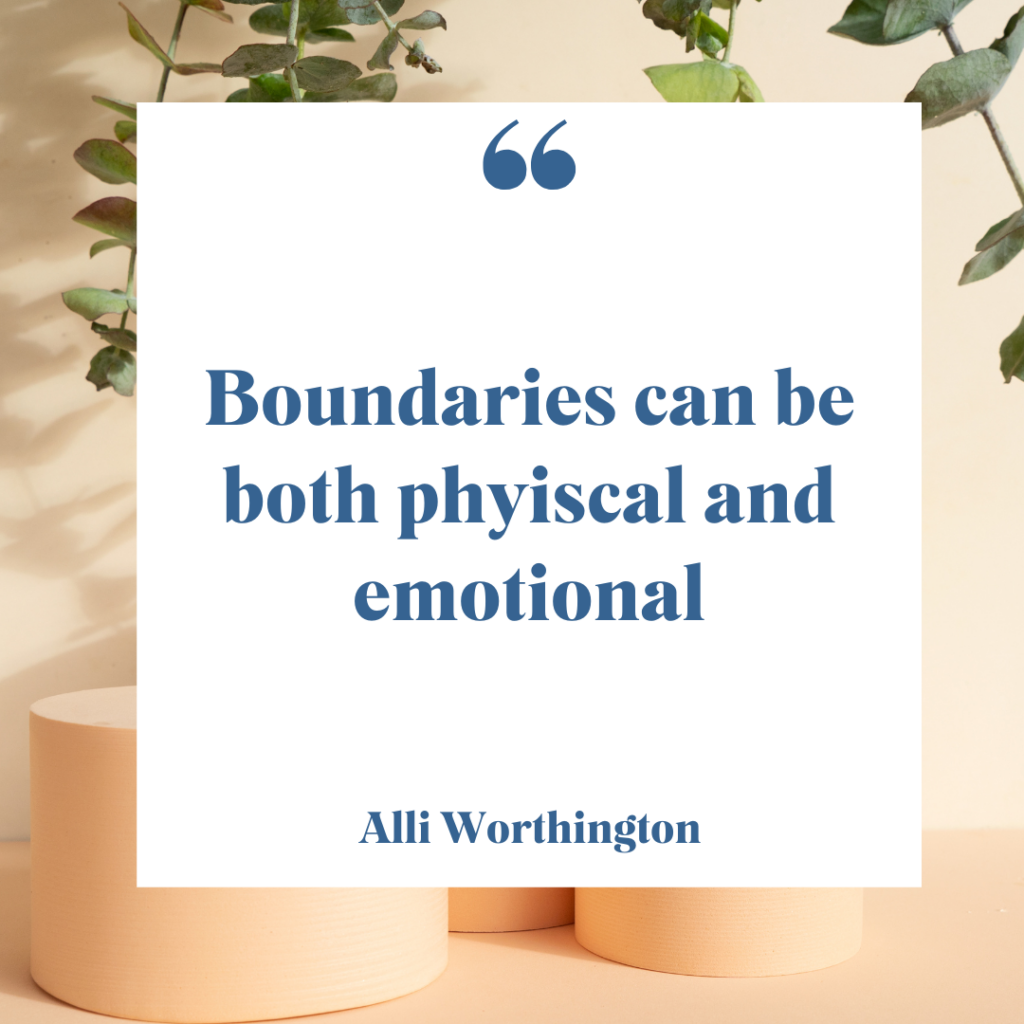
They can be physical, like protecting your time, your space, or your schedule. They can also be emotional, such as protecting your peace, feelings, and beliefs. Both matter. Both count.
When we learn to say no to what doesn’t fit our priorities, we make room for what does. We manage our time better, feel less overwhelmed, and show up with more patience and more joy. And we stop living in that constant state of “I’m doing everything for everyone and nothing for myself.”
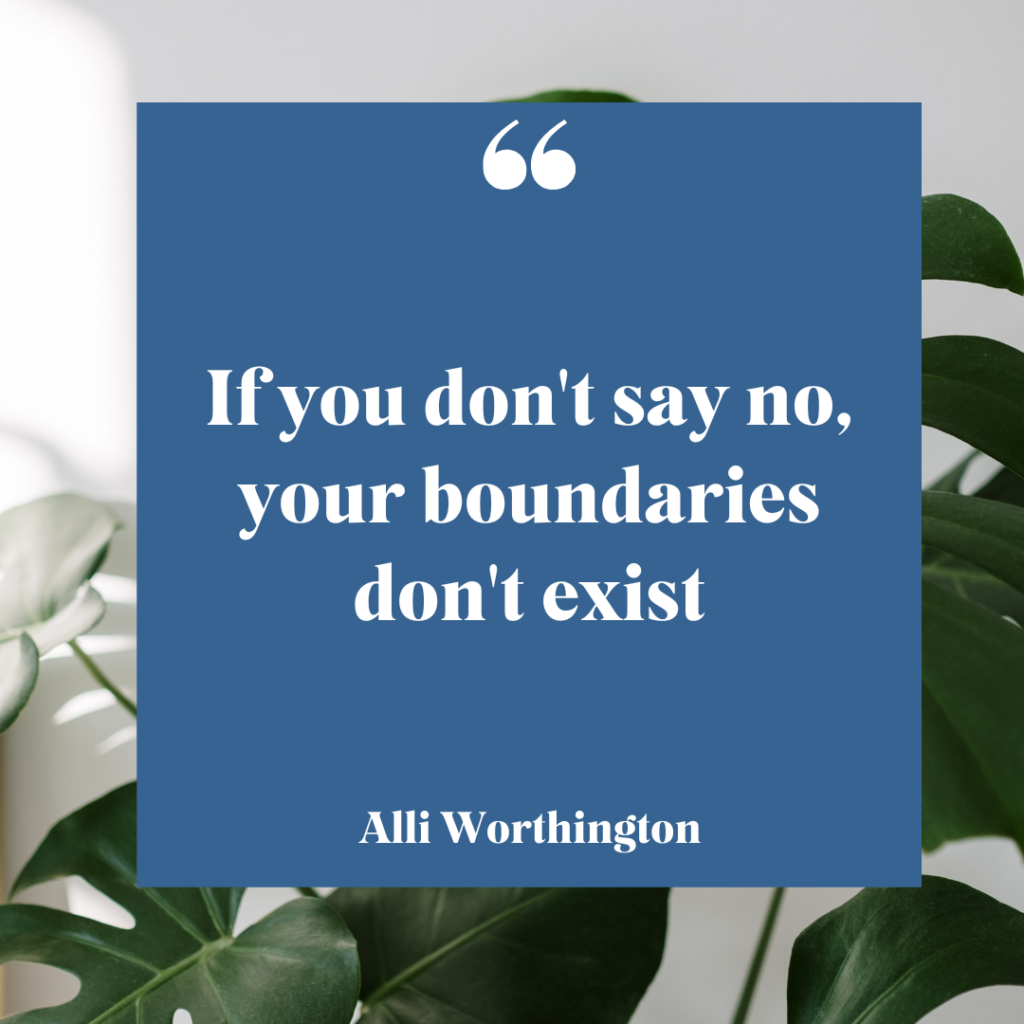
If we never say no, our boundaries don’t exist.
If you want to go deeper, listen to Boundaries, Balance, and Breakthroughs: The Best of Emotional Health. You will hear insights on boundaries, balance, rest, minimalism, and intentional living from people who have spent years practicing what they teach.
The Payoffs of Saying No
When moms learn to say no with confidence, life gets lighter. We stop carrying more than we can handle, and we finally make room for the things that matter most.
Here are some of the biggest payoffs you’ll start to notice when you practice saying no:
1. You get your time back: Every no gives you a little piece of your day back.
Example: You skip a last‑minute volunteer request and suddenly have time to breathe, rest, or simply enjoy your kids without rushing.
2. You feel more in control: Instead of letting everyone else decide how your week looks, you get to choose.
Example: You say no to an extra project at work, and your whole week feels calmer and more manageable.
3. You show your kids what healthy boundaries look like: Kids learn by watching us. When they see you protect your energy, they learn to do the same.
Example: You turn down an invitation because you’re tired, and your child sees you choose rest without guilt.
4. You have more energy for what matters: When you stop saying yes to everything, you stop spreading yourself thin.
Example: You say no to a commitment that doesn’t fit your priorities, and now you have the energy to enjoy the things that actually fill you up.
5. You feel less stressed and overwhelmed: Saying no creates space for peace.
Example: You decline a weekend activity you don’t have capacity for, and instead you get a slow morning that helps you reset.
6. Your relationships get healthier: Clear boundaries help people understand what you can offer and what you can’t. That honesty builds trust.
Example: You tell a friend you can’t help this time, and she knows you’re being truthful, not avoiding her. The relationship stays strong because you’re showing up honestly.
7. You make room for better things: Every no to something that drains you becomes a yes to something that supports you.
Example: You say no to a commitment that doesn’t fit your values, and later you have time for something that brings joy or growth.
Saying no is one of the most powerful tools we have as moms to protect our time, our energy, and our peace. When we learn to say no kindly and confidently, and stay steady when people push back, we create space for a life that actually fits our values and our capacity.
We stop running on empty, model healthy boundaries for our kids and strengthen our relationships with honesty instead of resentment. And we finally make room for the things that matter most.
The payoffs are real: more calm, more clarity, more joy, and a version of motherhood that feels sustainable instead of overwhelming.
A simple no can change everything not because it shuts doors, but because it opens the right ones.
Your Action Step
Maybe saying no isn’t your superpower, but you FOR SURE have one! Take this 2-minute free quiz to find out your secret superpower.